The Business Case for Sustainability: Impact on Growth and Profit
Updated: Jul 28
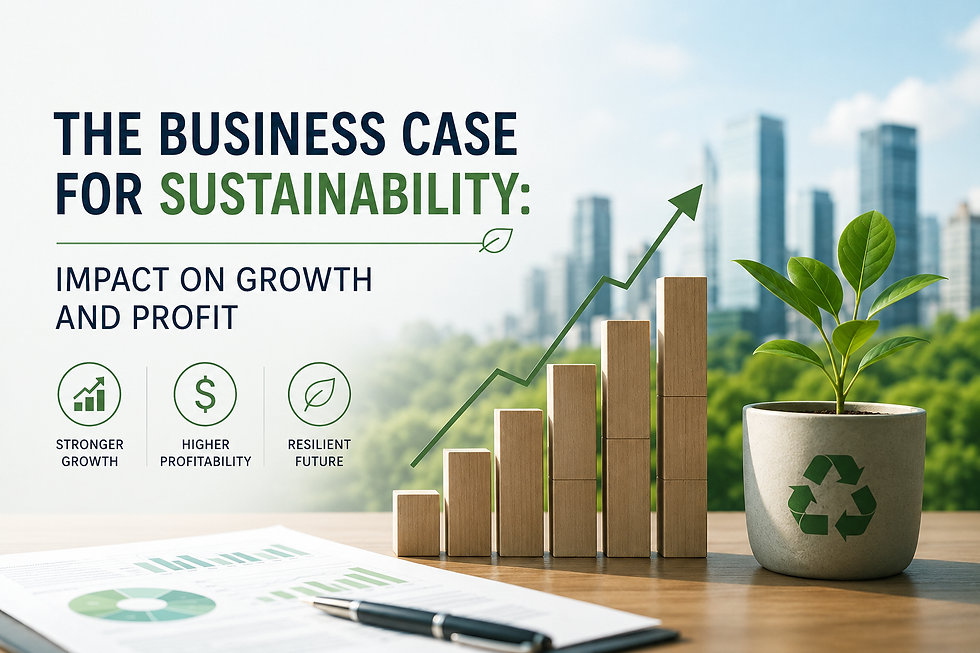
Sustainability is no longer just a buzzword or a moral choice. It has become a practical strategy that helps businesses grow, reduce costs, and build stronger relationships with customers and communities. Companies that adopt eco-friendly practices often find they gain a competitive edge, improve their reputation, and increase profitability. This post explores why sustainability makes sense for businesses and how it benefits organizations in concrete ways.
How Sustainability Benefits Organizations
Sustainability offers multiple advantages that impact a company’s bottom line and long-term success. Here are some key benefits:
Cost Savings through Efficiency
Reducing energy use, minimizing waste, and optimizing resource consumption lower operational costs. For example, companies that switch to LED lighting or install solar panels often see significant reductions in electricity bills.
Stronger Brand Loyalty and Customer Trust
Consumers increasingly prefer brands that demonstrate environmental responsibility. Businesses that communicate their sustainability efforts build trust and attract loyal customers who value ethical practices.
Access to New Markets and Investment
Sustainable businesses can tap into growing markets for green products and services. Investors also favor companies with strong environmental, social, and governance (ESG) records, which can improve access to capital.
Regulatory Compliance and Risk Reduction
Governments worldwide are tightening environmental regulations. Proactively adopting sustainable practices helps companies avoid fines, legal issues, and reputational damage.
Employee Engagement and Retention
Many employees want to work for companies that care about the planet. Sustainability initiatives can boost morale, increase productivity, and reduce turnover.
Practical Examples of Sustainability Driving Business Success
Several companies have demonstrated how sustainability can fuel growth and profit:
Patagonia
This outdoor apparel brand uses recycled materials and encourages product repair to reduce waste. Their commitment to sustainability has built a passionate customer base and strong brand identity.
Unilever
Unilever’s Sustainable Living Plan focuses on reducing environmental impact while growing the business. Their brands with sustainability commitments have grown 69% faster than others.
Interface
A carpet tile manufacturer, Interface set ambitious goals to eliminate negative environmental impact. They reduced greenhouse gas emissions by 96% and saved millions through energy efficiency.

Steps Businesses Can Take to Become More Sustainable
Adopting sustainability does not require a complete overhaul overnight. Companies can start with manageable steps that build momentum:
Conduct an energy audit to identify savings opportunities.
Switch to renewable energy sources like solar or wind.
Reduce single-use plastics and improve recycling programs.
Source materials from sustainable suppliers.
Engage employees in sustainability goals and training.
Measure and report environmental impact transparently.
Sustainability as a Growth Strategy
Sustainability is not just about reducing harm; it can actively drive growth. Companies that innovate with eco-friendly products often capture new customer segments. For example, electric vehicle manufacturers have disrupted traditional car markets by offering cleaner alternatives. Similarly, food companies that reduce packaging waste or use organic ingredients appeal to health-conscious consumers.
By embedding sustainability into their core strategy, businesses can differentiate themselves, improve operational resilience, and build long-term value.


Comments