Harnessing Sustainability Technology for Wildfire Management
Updated: Sep 13
Understanding the Challenge of Wildfires
Wildfires are complex natural disasters influenced by weather, vegetation, and human factors. Their frequency and severity have increased in recent decades due to:
Rising global temperatures
Extended dry seasons and droughts
Expansion of urban areas into wildlands
Accumulation of dry vegetation acting as fuel
These conditions create a perfect storm for fires to ignite and spread rapidly. Once a wildfire starts, it can be difficult to contain, especially in remote or rugged terrain. Traditional firefighting relies on ground crews, water drops from aircraft, and firebreaks, but these methods can be slow, costly, and dangerous.
Sustainability technology offers new ways to detect, monitor, and fight wildfires with greater precision and efficiency. These tools also help reduce the environmental footprint of firefighting efforts.
Early Detection and Monitoring with Sensors and Drones
One of the most critical factors in containing wildfires is early detection. The sooner a fire is spotted, the faster responders can act to stop it from spreading.
Sensor Networks
Deploying networks of sensors in fire-prone areas allows continuous monitoring of environmental conditions such as temperature, humidity, and smoke particles. These sensors can send real-time alerts when they detect signs of fire.
Example: The Forest Service in California uses sensor arrays to monitor remote forests. These sensors provide early warnings that help dispatch firefighting teams before fires grow large.
Drones for Surveillance
Drones equipped with thermal imaging cameras can fly over vast areas to identify hotspots invisible to the naked eye. They provide detailed aerial views without risking human lives.
Example: In Australia, drones have been used to map active fires and assess damage quickly. This information helps direct firefighting resources more effectively.
Together, sensors and drones create a powerful early warning system that improves response times and containment success.
Using Artificial Intelligence to Predict Fire Behavior
Predicting how a wildfire will spread is essential for planning containment strategies. Artificial intelligence (AI) models analyze weather data, terrain, and vegetation to forecast fire paths and intensity.
AI-Powered Fire Models
AI algorithms process large datasets to simulate fire behavior under different conditions. These models help firefighters decide where to build firebreaks, deploy crews, and drop water or retardants.
Example: The U.S. Department of Energy developed an AI system that predicts wildfire spread with high accuracy. This tool has been used in recent fire seasons to guide tactical decisions.
Benefits of AI Prediction
Reduces guesswork in firefighting
Improves resource allocation
Enhances safety for firefighters and residents
By integrating AI into wildfire management, agencies can act more strategically and contain fires faster.
Sustainable Firefighting Equipment and Methods
Traditional firefighting often relies on heavy machinery and chemical retardants that can harm the environment. Sustainability tech promotes greener alternatives that minimize ecological damage.
Eco-Friendly Fire Retardants
New fire retardants made from biodegradable materials reduce toxic runoff into soil and water. These retardants slow fire spread without long-term environmental harm.
Example: Some companies produce plant-based retardants that break down naturally after use, protecting wildlife and waterways.
Electric and Hybrid Firefighting Vehicles
Electric-powered firefighting vehicles produce fewer emissions and operate quietly, reducing pollution and noise in sensitive areas.
Example: Several fire departments are testing electric trucks and drones for firefighting support, cutting carbon footprints.
Controlled Burns with Precision Tools
Controlled or prescribed burns reduce excess vegetation that fuels wildfires. Using GPS-guided ignition devices and drones, crews can conduct these burns safely and precisely.
Example: In Canada, drone ignition systems allow controlled burns in hard-to-reach areas, lowering wildfire risk without damaging ecosystems.
These sustainable methods help balance fire containment with environmental protection.
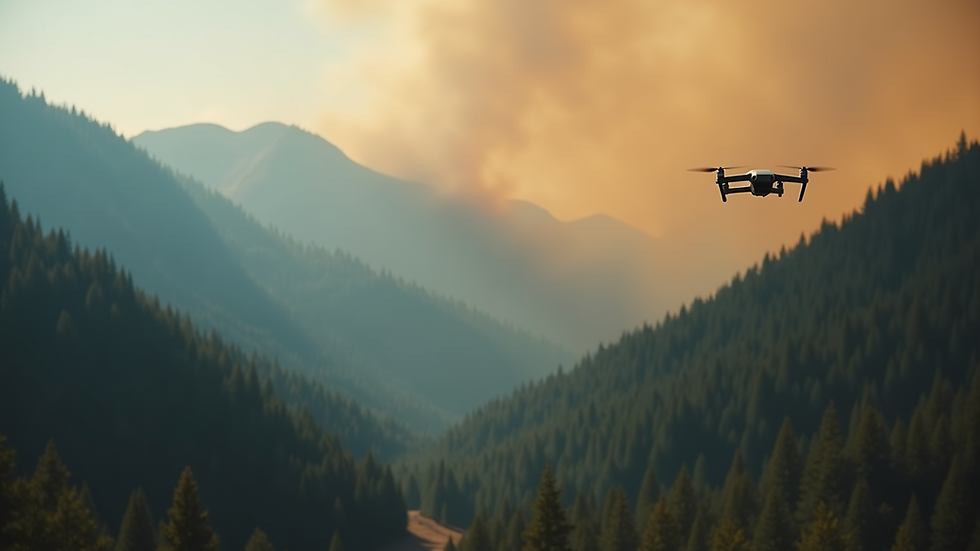
Drone monitoring wildfire spread in forested terrain
Community Engagement and Smart Land Management
Technology alone cannot stop wildfires. Engaging communities and managing land sustainably are key to reducing fire risks.
Smart Land Use Planning
Using satellite data and GIS mapping, planners can identify high-risk zones and regulate development accordingly. Buffer zones and fire-resistant landscaping reduce fire spread near homes.
Example: Some California counties use mapping tools to enforce building codes and vegetation management in wildfire-prone areas.
Public Awareness Apps
Mobile apps provide residents with real-time fire alerts, evacuation routes, and safety tips. These tools improve preparedness and reduce panic during emergencies.
Example: The "FireReady" app in Australia sends notifications about nearby fires and safety instructions, helping communities stay informed.
Community-Based Firefighting
Training local volunteers with tech tools like handheld sensors and communication devices strengthens firefighting capacity in remote areas.
Example: Indigenous communities in the Amazon use traditional knowledge combined with GPS mapping to conduct controlled burns and monitor fires.
By combining technology with community action, wildfire containment becomes more effective and inclusive.
Renewable Energy and Infrastructure Resilience
Wildfires often damage power lines and infrastructure, causing blackouts and hazards. Sustainability tech supports building more resilient systems.
Smart Grids and Microgrids
Smart electrical grids can isolate damaged sections and reroute power, reducing wildfire ignition risks from faulty equipment.
Example: Utilities in wildfire-prone regions install sensors on power lines to detect faults early and shut off power automatically.
Solar-Powered Fire Stations
Fire stations powered by solar panels remain operational during outages, ensuring continuous response capabilities.
Example: Some fire departments in California have installed solar arrays with battery storage to maintain readiness during emergencies.
Investing in renewable energy infrastructure helps communities withstand wildfire impacts and recover faster.
The Road Ahead: Integrating Sustainability Tech for Wildfire Control
Containing wildfires requires a multi-faceted approach that blends technology, ecology, and community involvement. Sustainability tech offers practical tools to detect fires early, predict their behavior, fight them with less environmental harm, and build resilient communities.
Governments, researchers, and local groups must collaborate to expand these technologies and share knowledge. Funding for innovation and training is essential to scale up effective solutions.
Wildfires will remain a challenge, but with smart use of sustainability tech, we can reduce their destruction and protect both people and the planet.
Wildfires demand urgent action and smarter tools. By embracing sustainability technology, we gain new ways to detect, predict, and contain fires while preserving ecosystems. The next step is supporting these innovations through policy, investment, and community engagement to build safer, greener futures.
Conclusion
In conclusion, the integration of sustainability technology into wildfire management is not just beneficial; it's essential. As we face increasing wildfire threats, we must leverage every available tool to protect our environment and communities. This includes investing in innovative technologies, fostering community engagement, and promoting sustainable practices. By doing so, we can create a more resilient future, where wildfires are managed effectively, and ecosystems are preserved.
By focusing on practical solutions and collaborative efforts, we can ensure that our approach to wildfire management is both effective and sustainable. Let's commit to this path for the sake of our planet and future generations.


Comments